- Sep 30, 2025
The Chimera by Tony Walker
- Tony Walker
- 0 comments
# The Making of "The Chimera": Where Stories Come From
One of the fascinating things about writing is how disparate fragments can live in your mind for decades, waiting for the right moment to coalesce into something new. "The Chimera" is a perfect example of this—a story built from memories spanning fifty years, all coming together to explore obsolescence, both architectural and human.
## The Telephone Exchanges
The seed was planted in the 1970s when I was a boy walking to Harrington Junior School. Every day I'd pass a telephone exchange on the hill between Low and High Harrington. You never saw anyone there—occasionally a van outside, but otherwise it was utterly mysterious. What was happening behind those walls?
I've always been drawn to these kinds of spaces: industrial buildings that appear to have purpose but are essentially empty. Storage units, depots, exchanges—places that feel haunted by their own obsolescence. I explored this fascination before in "The Haunting of Unit 409," but telephone exchanges have a particular eeriness to them.
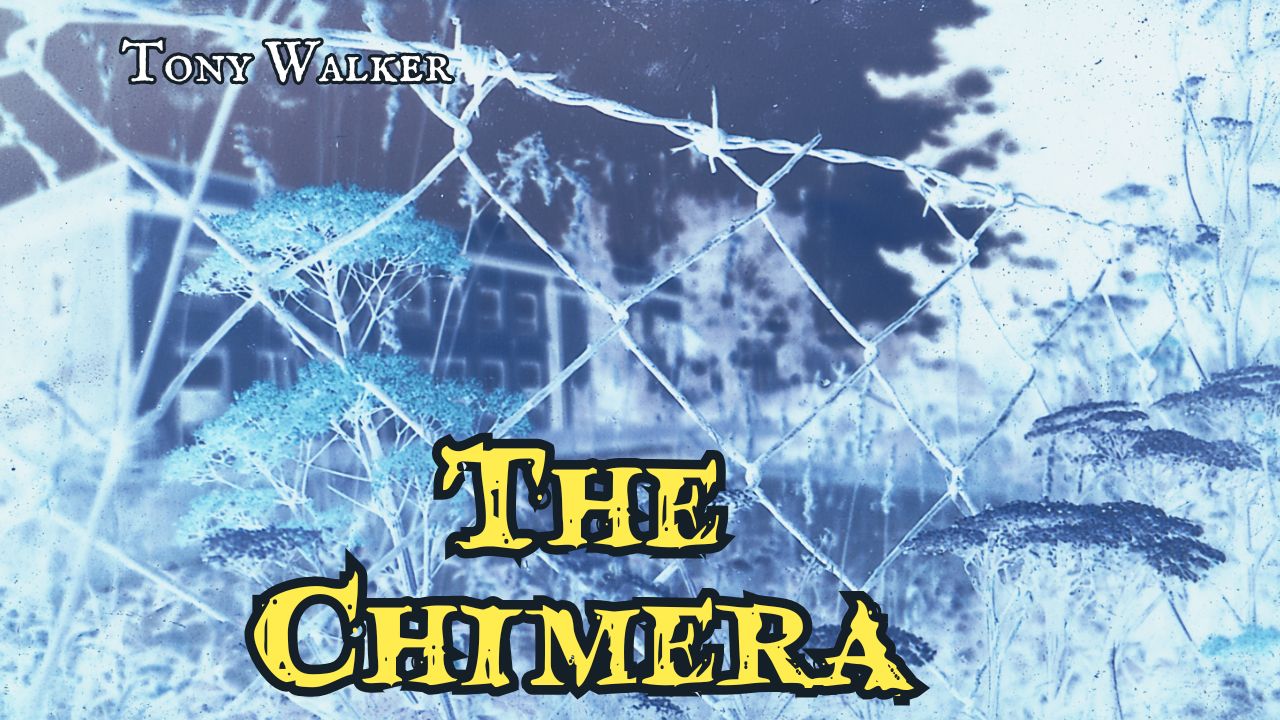
This summer, fifty years after that childhood memory, we stayed in Somerset near Pilton and spent a day in Shepton Mallet. It's a town with a certain run-down charm, clearly more prosperous once, home to England's oldest jail. While walking the dogs, we passed the local telephone exchange—a brutalist concrete structure from the sixties or seventies, surrounded by buddleia and weeds pushing through the chain-link fence. Nobody there. Nobody anywhere near it. And I thought: that's the setting.
These buildings were once humming with engineers and staff, vital nodes in the communication network. Now, as landlines die out, they're being closed down, leaving these concrete monuments to a bygone era. Eerie, liminal spaces where things still happen—but who knows what?
## The Ten-Minute Retirement
Around 1989 or 1990, I was working as a temp in London Underground's pay office. My job was explaining tax miscalculations to people, which I rather enjoyed. The office was divided by those flimsy partitions that provide no real privacy, and next to us sat the retirement team—two young men in suits, maybe twenty-three or twenty-four.
I remember one particular day. A retired train driver came in—he must have been sixty-five, having worked for London Underground since he was sixteen. Nearly fifty years of service. They gave him a clock and a bottle of cheap white wine. He was allocated his time slot, and he began telling his stories. After about ten minutes, I heard them cut him off: "Right then, Joe, we have someone else coming in now. All the best. Thank you for your lifetime service."
That was it. A lifetime reduced to ten minutes, a shitty clock, and a bottle of wine. The casualness of it haunted me.
## The Knacker's Yard
Years later, working in healthcare, I had a patient in his fifties who'd spent his life doing brutal physical work—farms, then an abattoir. The work had destroyed his body. He was in constant pain, worn down by arthritis and, I suspect, years of heavy drinking.
"I'm for the knacker's yard," he told me. He'd spent so long working in that abattoir, sending old farm animals to slaughter, that he'd internalized the logic: when something's worn out, you put it down. From the outside, we could see he was only in his fifties, that there were other possibilities. But he'd made his decision. Eventually, he took his own life. It was desperately sad.
## Men and Obsolescence
This connects to something I've observed across generations of my own family. My grandfathers—one a bus driver, one a coal miner—didn't live long after retirement. Same with my stepfather and biological father. For many men of their generation, work wasn't just what they did; it was who they were. When that ended, so did their sense of purpose.
There's something profound and troubling about that equation: the idea that a man's worth is measured entirely by his productivity, and when that ends, he becomes obsolete.
## The Chimera
All these fragments—the mysterious telephone exchanges, the retired driver dismissed in ten minutes, the man who saw himself as ready for slaughter, the pattern of men losing purpose after work—they suddenly came together. The story of obsolescence, both of buildings and people. Of things and men who once had vital purposes but are now left to decay, forgotten.
As for the chimera itself—that grotesque creature with chicken's feet—I honestly have no idea where that came from. That's the mystery of writing, I suppose. Some things emerge from the deep without explanation, bringing their own strange logic to the story.
And that's how "The Chimera" was born.